Source POE Power Splitter for Servers, Workstations, and SOHO
Explore 30 POE Power Splitter options for servers, workstations, and SOHO networks. Compare models like the 10/100/1000Mbps splitter with 9-48V input and various DC outputs to find the right solution.
Key considerations
Products List


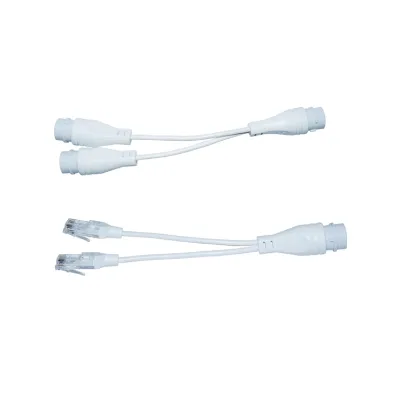
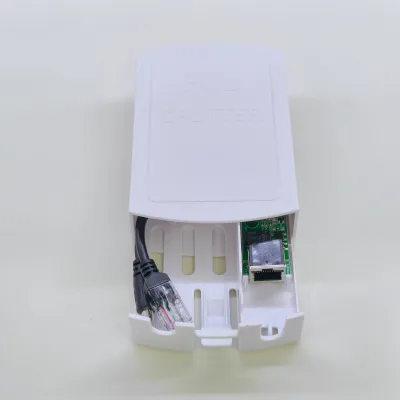



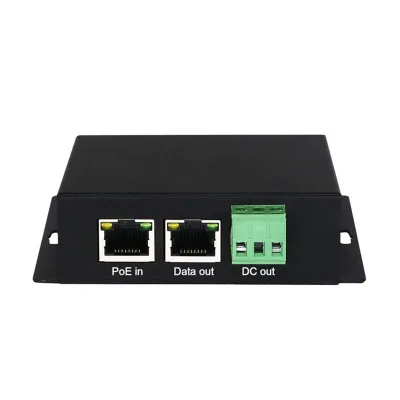


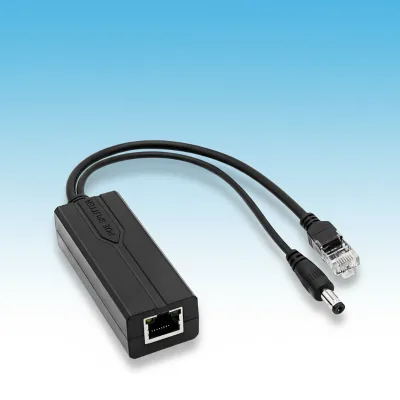
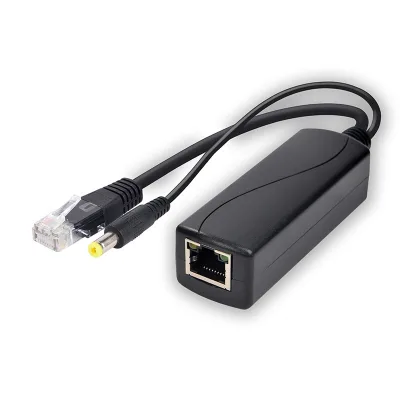
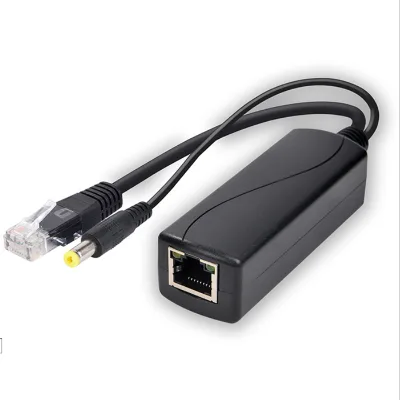
10/100/1000m Poe Splitter 48V to 5V/2.4A IEEE802.3af, Isolated Type: 1.5kv
$0.50 - $5.50
MOQ: 10 Pieces


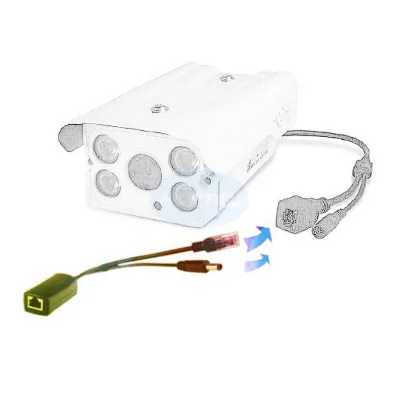
Comprehensive Sourcing Guide
Strategic Sourcing Guide for POE Power Splitter Procurement
Understanding Core Technical Specifications and Variability
When sourcing Power over Ethernet (PoE) splitters, buyers must navigate a landscape defined by diverse technical configurations rather than a single universal standard. The product data indicates a significant variance in transfer rates, with observed specifications ranging from 10/100Mbps to 10/100/1000Mbps. This distinction is critical because a device rated for 10/100Mbps will bottleneck a Gigabit network, whereas a 10/100/1000Mbps unit ensures full throughput for modern data-intensive applications. Procurement teams must verify the specific transfer rate requirement against the network infrastructure of the intended deployment site.
Furthermore, the electrical output capabilities vary widely across available inventory. Observed DC output specifications include fixed voltages such as 5V 2A and 12V 1A, alongside switchable output options capable of delivering 12/16/24V. Power capacity also fluctuates, with some units rated for 30W output. This variability dictates the suitability of the splitter for specific end devices; a security camera requiring 24V cannot be powered by a 12V-only splitter, regardless of the data speed. Buyers should treat these attributes as specific observations of individual listings rather than universal features of all PoE splitters. The presence of "802.3bt" in some specifications suggests support for higher power standards, but this must be confirmed on a per-unit basis. Additionally, the port structure is noted as "Not Modular" in several instances, implying a fixed configuration that limits future expansion without replacing the hardware.
Compliance Standards and Certification Verification
Navigating the regulatory landscape for electronic components requires rigorous verification of compliance standards. The supplied data references several specific certifications, including CE/EMC, CE/LVD, and FCC Certification. These marks indicate adherence to safety and electromagnetic compatibility requirements in specific markets, particularly Europe and North America. However, the data also lists "ce" in lowercase in separate entries, highlighting the inconsistency often found in product listings. Buyers must not assume that a product listing implies full compliance; instead, they must request valid, up-to-date test reports for the specific model number being purchased.
The product data also mentions "RoHS" in a low-confidence background section. While this is a common requirement for electronic goods, it should not be treated as a confirmed attribute for any specific unit without explicit documentation. Similarly, while "FCC Certification" is listed, the specific standard reference "19313191" appears to be a dimensional measurement rather than a standard code, creating potential confusion. Procurement professionals must distinguish between physical dimensions and regulatory standards. The presence of "CE" and "FCC" in the high-confidence facts suggests these are common attributes, but the absence of a specific standard number for FCC in the high-confidence list means buyers must verify the exact compliance level required for their target market. Relying on generic certification claims without physical proof of testing can lead to customs delays or legal liabilities in regulated regions.
Cost Drivers and Economic Factors in Sourcing
The economic landscape for PoE splitters is characterized by a wide range of pricing and minimum order quantities (MOQ). The observed price range spans from $0.10 to $75.48 USD, a disparity that reflects differences in power capacity, transfer speed, build quality, and brand positioning. A unit priced at the lower end of this spectrum likely corresponds to a basic 10/100Mbps splitter with fixed low-voltage output, while the higher-priced items may offer Gigabit speeds, switchable voltage, or higher wattage ratings. Buyers must align their budget with the technical requirements of the project; overspending on high-end features for a low-bandwidth application is inefficient, just as under-specifying for a high-power device is risky.
MOQ values observed in the market range from 1 to 1000 units. This flexibility allows for different procurement strategies. Small order acceptance is explicitly noted as a feature, enabling buyers to test samples or fulfill small-scale deployments without significant capital commitment. However, larger orders may offer better unit economics, though the specific discount tiers are not provided in the source data. The "Selling Units" attribute indicates that single-item purchases are possible, which is ideal for prototyping. Conversely, bulk packaging details, such as "10PCS/CTN" or "1PCS/Bag," influence logistics costs. Buyers should calculate the total landed cost, including shipping and handling, rather than focusing solely on the unit price, as the packaging format can significantly impact freight efficiency.
Typical Applications and Deployment Scenarios
The versatility of PoE splitters allows them to serve a broad spectrum of network applications. The data identifies "Server" and "Workstation" usage, suggesting that these devices are integral to powering network-attached storage or remote computing nodes. Additionally, the "SOHO" (Small Office/Home Office) application category highlights their suitability for small business environments where centralized power distribution is limited. The "Intermediate Node Routers" designation points to use cases in network topology where power needs to be injected into specific segments of the network without running separate power lines to every device.
The "CATV Equipment" and "Housing" attributes suggest applications in cable television infrastructure and physical enclosure integration. For instance, outdoor POE splitters are specifically noted, indicating deployment in environments exposed to the elements, which necessitates robust housing materials like ABS. The "Wired" and "Integrated wiring" attributes confirm that these are not wireless solutions but rather physical interfaces that bridge Ethernet data lines with power lines. The "Position" attributes of "Front" and "Side" likely refer to the physical mounting orientation or port placement, which is crucial for installation in tight server racks or wall-mounted enclosures. Understanding these application contexts helps buyers select the right form factor and environmental rating for their specific deployment needs.
Supplier Evaluation and Product Identification
Evaluating suppliers requires a focus on product identification and brand consistency. The data lists several distinct brand names, including "caratar," "GEVILION," and "OEM" (Original Equipment Manufacturer). The presence of OEM branding suggests that some products are generic or white-labeled, which may offer cost advantages but requires careful vetting of the underlying manufacturer's quality control processes. Model numbers vary significantly, ranging from "TS0524LT" and "5912 MODEL" to "PD1275W- IDS" and "MT-7001-4." This fragmentation means that buyers cannot rely on a single model number to represent a category; they must match specific model numbers to their technical requirements.
The origin of the products is consistently listed as China, with specific locations like "Dongguan Guangdong" and "Guangdong, China" mentioned. While this provides a geographic baseline, it does not guarantee quality or consistency. Buyers should verify the specific factory capabilities and production history of the supplier, rather than relying solely on the country of origin. The "Customization: Available" attribute is a significant differentiator, indicating that suppliers may offer tailored solutions for specific voltage or port requirements. However, customization often introduces longer lead times and higher costs, which must be factored into the procurement timeline. The "Condition: New" attribute confirms that the market is dominated by new equipment, but buyers should still verify the warranty terms and return policies associated with new stock.
Quality Control and Long-Term Procurement Considerations
Ensuring long-term reliability requires a proactive approach to quality control. The "Material: ABS" specification indicates the use of durable plastic housing, which is standard for indoor and outdoor equipment, but the thickness and flame-retardant properties are not detailed. Buyers should request material safety data sheets (MSDS) or specific material grades to ensure the housing can withstand the intended environmental conditions, especially for "outdoor POE splitter" applications. The "Power interface: 5.5*2.1mm" is a specific connector dimension that must be matched to the power adapter or device being used; a mismatch here renders the splitter useless regardless of its internal electronics.
Long-term procurement considerations also involve the stability of the supply chain. The "Small Orders: Accepted" feature provides flexibility, but buyers planning large-scale rollouts should secure volume agreements to mitigate price volatility. The "Packaging" details, such as "Carton" or "Box," suggest standard industrial packaging, but buyers should verify if the packaging includes anti-static protection or moisture barriers, which are critical for electronic components. Furthermore, the "Communication Mode: Full-Duplex & Half-Duplex" specification implies support for various network traffic patterns, but buyers should confirm that the splitter handles full-duplex traffic efficiently to prevent latency issues in high-traffic networks. Finally, the absence of a "Firewall" in the specifications confirms that these devices are passive or active power/data converters, not security appliances; buyers must ensure that network security is managed by separate firewall hardware if required.
Summary of Key Selection Criteria
To summarize the procurement strategy, buyers must prioritize technical alignment over price alone. The following table outlines the critical attributes to verify before placing an order, based on the observed market data.
| Attribute Category | Key Verification Points | Critical Questions for Supplier |
|---|---|---|
| Transfer Rate | 10/100Mbps vs. 10/100/1000Mbps | Does the device support the full bandwidth of my network? |
| DC Output | 5V 2A, 12V 1A, or Switchable 12-24V | Is the voltage and amperage compatible with my end device? |
| Certification | CE/EMC, CE/LVD, FCC | Can you provide valid test reports for the specific model? |
| Physical Specs | Port Structure, Interface Size (5.5*2.1mm) | Does the connector match my power adapter? |
| Environment | Indoor vs. Outdoor (ABS Housing) | Is the housing rated for the intended environmental exposure? |
| Order Terms | MOQ (1-1000), Customization | What are the lead times for customized or bulk orders? |
By rigorously applying these verification steps, procurement teams can navigate the complex PoE splitter market, ensuring that the selected components meet both immediate technical needs and long-term operational reliability standards. The diversity of the market, with its wide range of models and specifications, demands a disciplined approach to data verification to avoid costly mismatches in deployment.
FAQs
What transfer rates do PoE splitters support?
PoE splitters support transfer rates ranging from 10/100Mbps to 10/100/1000Mbps. Buyers must verify the specific rate against their network infrastructure to avoid bottlenecks, as 10/100Mbps units cannot handle Gigabit data speeds.
Can I find PoE splitters with switchable voltage outputs?
Yes, some models offer switchable outputs of 12/16/24V to match different device requirements. Other units provide fixed outputs like 5V 2A or 12V 1A, so selecting the correct voltage is critical for powering specific end devices.
Which certifications are commonly listed for these devices?
Common certifications include CE/EMC, CE/LVD, and FCC Certification for safety and electromagnetic compatibility. Buyers should request valid test reports for the specific model number to ensure compliance, as generic claims may not apply to all units.
How do MOQs vary for PoE splitter orders?
Minimum order quantities range from 1 to 1000 units, allowing for both sample testing and bulk procurement. Small order acceptance is available, enabling buyers to fulfill small-scale deployments without significant capital commitment or inventory risk.
What materials are used for the splitter housing?
Housings are typically made of ABS material, suitable for both indoor and outdoor environments. Buyers should verify if the housing includes specific environmental ratings, especially for outdoor applications exposed to weather elements.
Where are these PoE splitters manufactured?
Products originate from China, with specific locations including Dongguan, Guangdong. While the country of origin is consistent, buyers should verify the specific factory capabilities and production history for quality assurance.